Cleanse
Zygote Cica Tea Tree Foam Cleanser
Is this right for my skin? →A foaming facial cleanser for the cleanser step of a routine. Centella Asiatica Extract is listed sixteenth and Melaleuca Alternifolia (Tea Tree) Extract eighteenth, with Allantoin and several flower extracts such as Chamomilla Recutita (Matricaria) Flower Extract further down the list. Cocamidopropyl Betaine and Sodium Laureth Sulfate provide the foaming base.
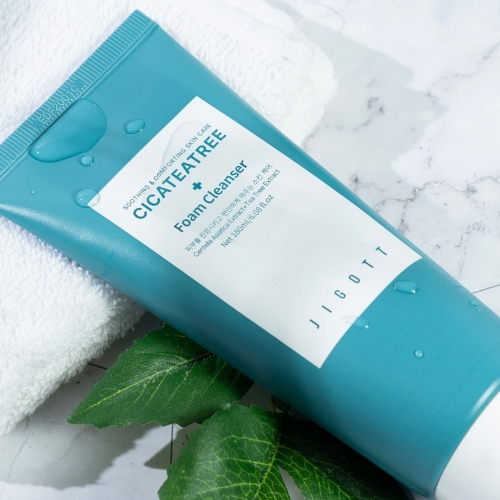
from ₩30,000 (≈ $22)
Ingredients checked Oct 26, 2026
Similar picks from other brands


Headline ingredients
Centella Asiatica Extract
Listed #16 of 30 · likely a small amount
Breakouts Centella asiatica extract is commonly included in products targeting breakout-prone skin.
Redness & sensitivity Centella asiatica extract is a well-known soothing ingredient used to help calm redness.
Melaleuca Alternifolia (Tea Tree) Extract
Listed #18 of 30 · likely a small amount
These are the ingredients the product name highlights. Labels list ingredients from most to least, but anything under 1% can appear in any order, so position is a rough guide, not an exact amount.
Research on its main ingredients
- Glycerin #5 — 2 randomized controlled trials · 13 skin studies in PubMed
Studies test set amounts; this product’s amount isn’t on the label. A study is not a claim about this product.
Full ingredient list
| 1 | Water | ||
| 2 | Palmitic Acid | ||
| 3 | Stearic Acid | Caution | Caution for clog-prone skin Stearic acid is a fatty acid commonly cited as potentially pore-clogging for acne-prone skin. |
| 4 | Myristic Acid | Caution | Caution for clog-prone skin Myristic acid is a fatty acid commonly cited as having pore-clogging potential |
| 5 | Glycerin | Active | Helps: Dryness |
| 6 | Lauric Acid | Caution | Caution for clog-prone skin Lauric acid is a fatty acid commonly cited as potentially pore-clogging for acne-prone skin. |
| 7 | Potassium Hydroxide | ||
| 8 | Beeswax | Bee products | |
| 9 | Cocamidopropyl Betaine | Caution | Caution for sensitive skin Cocamidopropyl betaine is a surfactant commonly reported to cause irritation or allergic reactions in sensitive individuals. |
| 10 | Glyceryl Stearate | ||
| 11 | PEG-100 Stearate | ||
| 12 | Phenoxyethanol | Caution | Caution for sensitive skin Phenoxyethanol is a preservative that can occasionally cause irritation in sensitive skin. |
| 13 | Sodium Benzoate | ||
| 14 | Sodium Laureth Sulfate | ||
| 15 | Sodium Chloride | ||
| 16 | Centella Asiatica Extract | Active | Helps: Breakouts · Redness & sensitivity |
| 17 | Fragrance | Fragrance | Caution for sensitive skin Listed fragrance ingredient or EU-declared fragrance allergen. |
| 18 | Melaleuca Alternifolia (Tea Tree) Extract | ||
| 19 | Butylene Glycol | Base | Mainly a solvent — it carries the formula and helps it spread |
| 20 | 1,2-Hexanediol | Base | Mainly a solvent — it carries the formula and helps it spread |
| 21 | Allantoin | Active | Helps: Redness & sensitivity |
| 22 | Disodium EDTA | ||
| 23 | Capric Acid | ||
| 24 | Borago Officinalis Extract | ||
| 25 | Centaurea Cyanus Flower Extract | ||
| 26 | Chamomilla Recutita (Matricaria) Flower Extract | Active | Helps: Redness & sensitivity |
| 27 | Hyacinthus Orientalis (Hyacinth) Extract | ||
| 28 | Lavandula Angustifolia (Lavender) Flower Extract | Caution | Caution for sensitive skin Lavender extracts are commonly reported as potential irritants or allergens for sensitive skin. |
| 29 | Salvia Sclarea (Clary) Extract | ||
| 30 | Ethylhexylglycerin | Base | Mainly a solvent — it carries the formula and helps it spread |
Ingredient notes are AI-assisted and come with their reasons. How we pick